
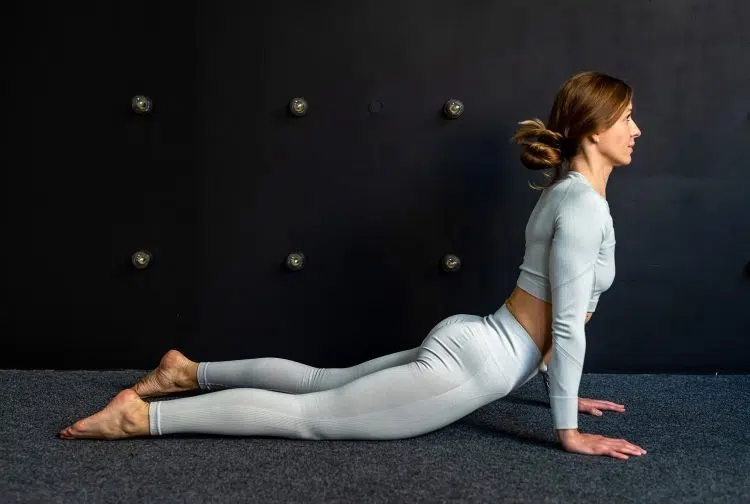
We all know that sitting at a desk all day isn’t ideal for our health. Aside from increasing the risk of serious issues like heart disease and type 2 diabetes, prolonged sitting wreaks havoc on your muscles. It causes stiffness and pain in your neck, back, hips, and shoulders.
But here is the good news: You don’t need to quit your job to feel better.
Physical therapist Hanna Kearney, D.P.T., explains that simple mobility exercises can reverse these negative effects. “Stretching isn’t just about flexibility; it’s about keeping your joints and muscles doing what they were designed to do,” she says.
By restoring blood flow and reminding your body how to move, you can improve your posture and reduce discomfort. Here are six essential stretches recommended by experts to help you feel better, both at your desk and after work.
1. Seated Spinal Twist
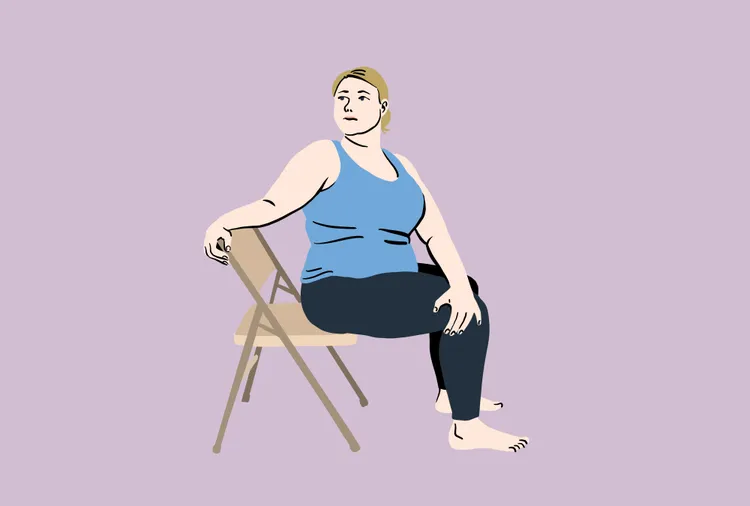
This move targets the middle of your spine (the thoracic spine). You can do this right at your desk to reduce the stiffness caused by slouching. Kearney notes that it also helps release tension in your neck and shoulders.
- How to do it:
- Sit up tall with your feet flat on the floor.
- Put your right hand on the back of your chair and your left hand on your right knee.
- Gently twist your upper body to the right. Keep your hips facing forward.
- Hold for 15 to 30 seconds while breathing normally.
- Return to the center and repeat on the left side.
2. Doorway Stretch
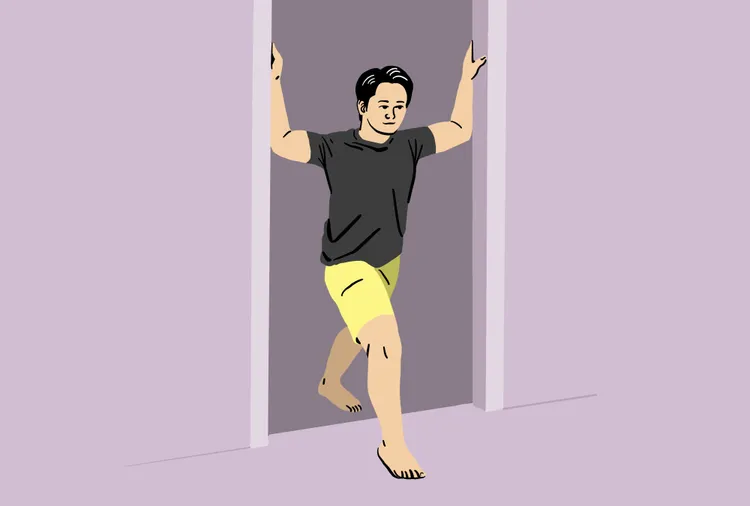
When you type at a computer, your arms reach forward, causing your shoulders to round and your chest to tighten. Zach Smith, D.P.T., suggests this stretch to open up the chest and return shoulders to a neutral position.
- How to do it:
- Stand in a doorway. Bend your elbows to 90 degrees and rest your forearms against the doorframe.
- Step forward with one foot. Gently lean in until you feel a mild stretch across your chest (aim for a 3 out of 10 intensity).
- Relax and breathe deeply, holding for 20 to 30 seconds.
3. Supine Hamstring Stretch
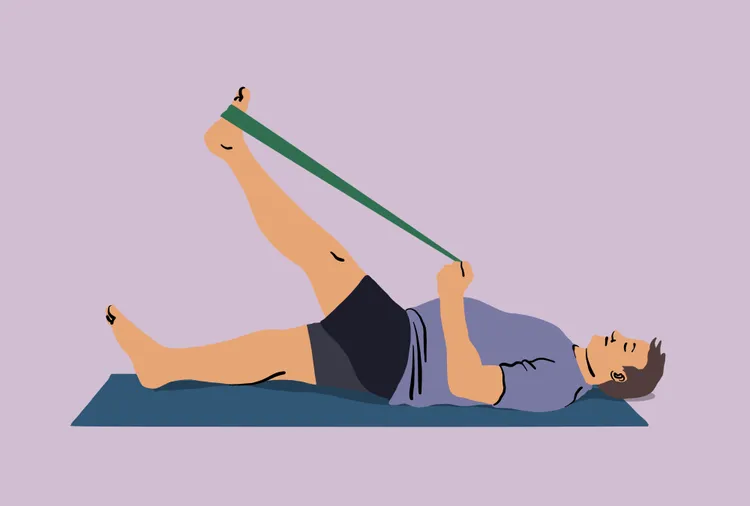
Sitting for long periods can cause your hamstrings (the back of your thighs) to shorten. Mark Gugliotti, D.P.T., recommends this move to restore flexibility to those stiff areas.
- How to do it:
- Lie on your back. Loop a towel or strap around the arch of your left foot.
- Keep your knee straight and gently lift the leg until you feel a comfortable stretch in the back of your thigh.
- Hold for 10 seconds, then slowly lower the leg.
- Repeat up to four times on each leg.
4. Crescent Lunge
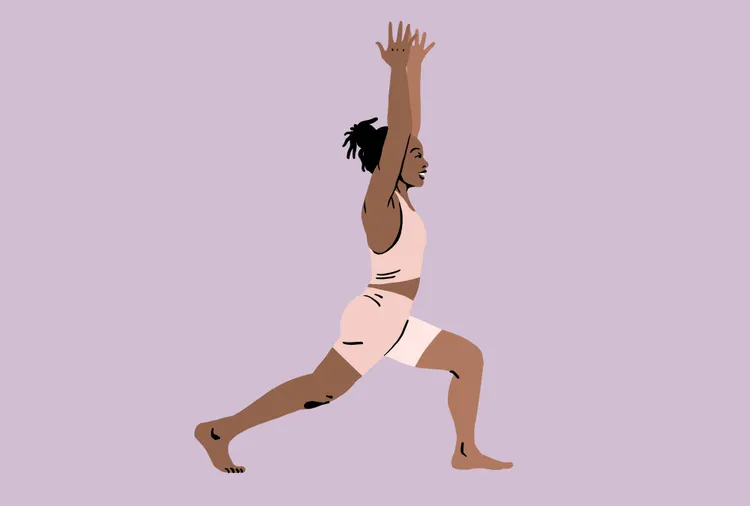
This is a multitasking move. According to Smith, it targets the hip flexors, back, abs, shoulders, and calves. It hits nearly every area that gets tight after a long day of sitting.
- How to do it:
- Stand with feet hip-width apart. Step your left foot back 2 to 3 feet.
- Lift your back heel so you are on the ball of your foot. Bend your front knee to a 90-degree angle.
- Straighten your back leg gently and lift your torso.
- Reach your arms up toward the sky, palms facing each other. Lengthen your spine.
- Hold for 10 to 30 seconds, then switch sides.
5. Glute Bridge
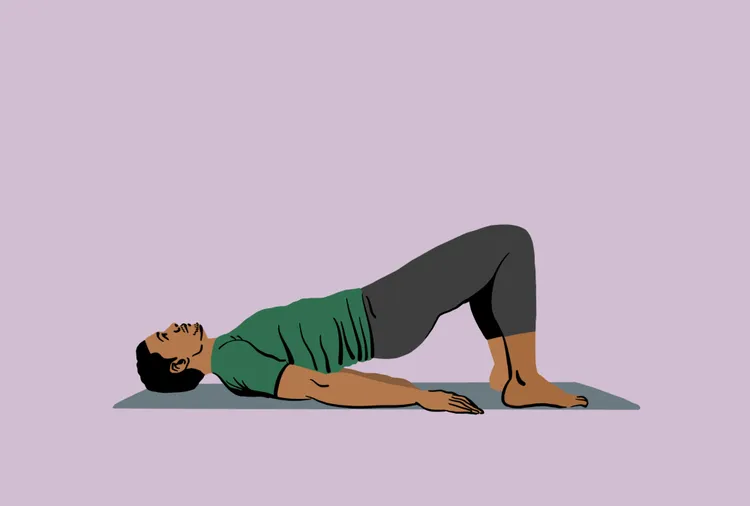
This exercise wakes up your glutes, which can “fall asleep” after sitting too long. Kearney emphasizes that this move helps stabilize your lower back and pelvis.
- How to do it:
- Lie on your back with knees bent and feet flat on the floor. Arms rest by your sides.
- Engage your core and squeeze your butt cheeks (not your lower back).
- Lift your hips until your body makes a straight line from shoulders to knees.
- Hold for 2 to 3 seconds, then lower down. Do 2 to 3 sets of 10–15 reps.
6. Cat-Cow
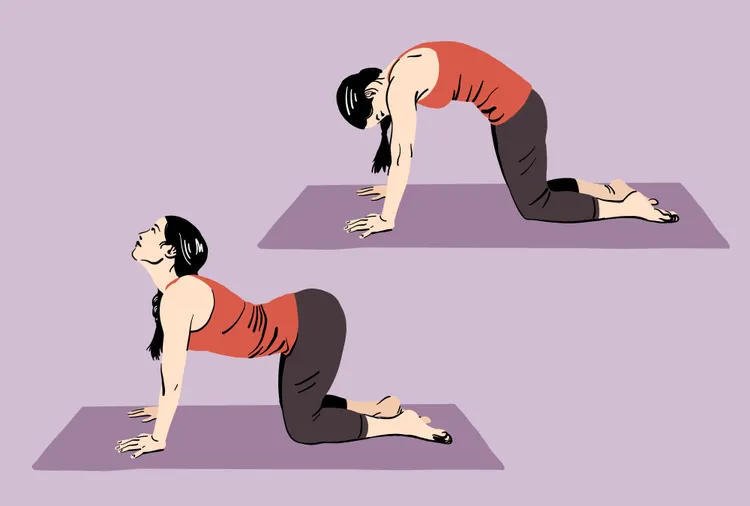
This is a dynamic stretch, meaning you are moving through it rather than holding still. It combats the stiffness from being hunched over a keyboard.
- How to do it:
- Start on your hands and knees. Hands should be under shoulders, knees under hips.
- Cow Pose: Inhale, arch your back, and lift your chest and tailbone upward.
- Cat Pose: Exhale, round your spine, and tuck your chin to your chest.
- Move slowly between these two poses for 8 to 10 cycles.
How to Exercise Safely
Before starting, remember to listen to your body.
- Warm Up: Kearney suggests a quick walk or arm circles to get your blood moving before stretching.
- Don’t Force It: You should feel a gentle pull, not pain.
- Consult a Pro: If you have numbness, tingling, or persistent pain, stop immediately. These symptoms could signal nerve issues that need a doctor or physical therapist.
5 Tricks to Stop Sitting So Much
In addition to stretching, try these tips to break up your day:
- Set a Timer: Every 30 to 45 minutes, stand up and move for a minute.
- Walk While Working: If possible, use a walking pad under your desk.
- Change Your Station: Use a standing desk or ask your employer if one is available.
- Walk and Talk: Take your meetings or phone calls while standing or pacing.
- Rearrange the Office: Put your printer or water bottle far away so you have to stand up to get them.
The Takeaway
We can’t always avoid sitting, but we can avoid the pain that comes with it. By using these simple stretches and creating habits to move more often, you can loosen up your tight hips, shoulders, and back. If you are ever unsure about a new movement, always check with a healthcare provider first.