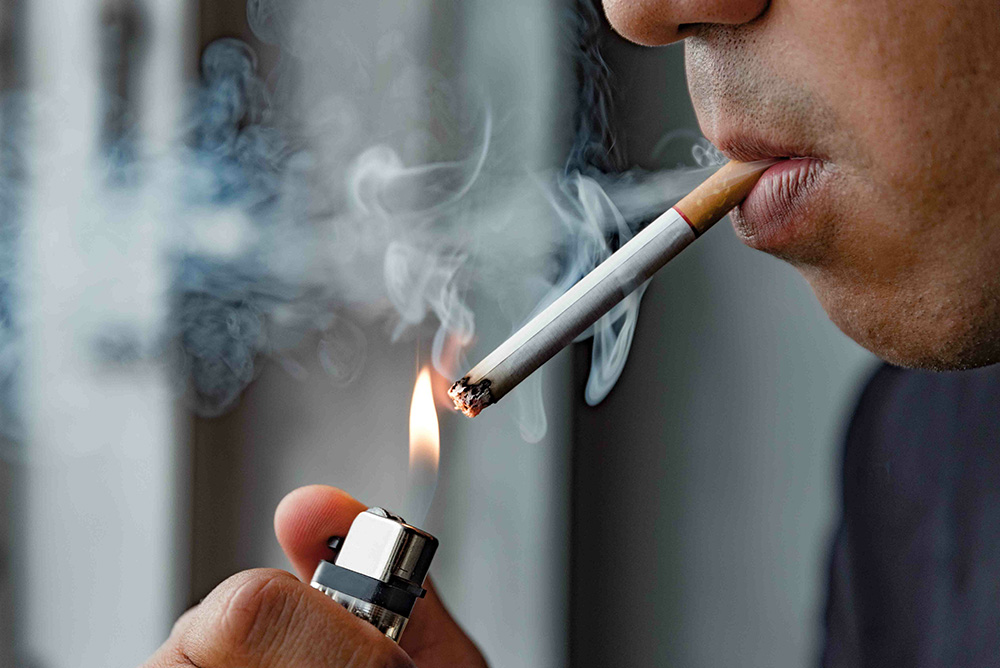
Did you know that smoking just 100 cigarettes in your entire lifetime could be enough to increase your risk for heart disease? It’s a shocking thought, but a major study is shedding new light on the dangers of even “light” smoking.
Even a Little is a Lot
Researchers from Johns Hopkins University recently looked at the smoking habits of over 300,000 adults over nearly two decades. What they found was stunning. Men and women who smoked as few as two cigarettes each day had a 60% higher chance of death from any cause compared to people who never smoked.
On top of that, the same group had a 50% greater risk of developing heart disease. It turns out that any amount of tobacco use can be a serious problem for your health.
How Smoking Hurts Your Heart
So, what’s actually happening inside your body? According to Dr. Jennifer Miao, a cardiologist at Yale University, smoking damages the lining of your blood vessels. This damage makes it easier for plaque to build up, which leads to coronary artery disease.
Smoking is also connected to other serious heart problems, like an irregular heartbeat (atrial fibrillation) and even stroke.
Is Cutting Back a Good Enough Solution?
You might think that just reducing the number of cigarettes you smoke is a safe bet. However, the study found that cutting back may not be enough to undo the harm.
While current smokers had the highest risk of death, even former smokers weren’t completely in the clear. The study showed that ex-smokers still had a higher risk of heart disease more than 20 years after they quit.
Interestingly, while the number of adult smokers in the U.S. has dropped significantly since 1965, the number of people smoking fewer than 15 cigarettes a day has actually gone up by 85%. This shows a shift in habits, but not necessarily a reduction in risk.
Why Quitting is the Only Answer
“We actually have the evidence … to say that even less than one cigarette a day can increase different multiple cardiovascular outcomes,” said Dr. Erfan Tasdighi, a co-author of the study. He and other experts stress that the only real solution is to quit smoking altogether.
Of course, quitting isn’t easy. Dr. Miao acknowledges that it’s “a lot easier said than done” and suggests that doctors need to support patients who are struggling by connecting them with the right resources and medical help.
The Immediate Benefits of Quitting
The good news is that your body starts to heal right away. Dr. Tasdighi emphasized, “It’s important that people know that when they stop smoking, their risk goes down immediately and significantly.”
The study did suggest that the biggest health benefits are seen in the first ten years after you quit. However, it takes a long time for your body to fully recover and reach the health level of someone who has never smoked. The key takeaway is simple: “it’s important to quit smoking early on, and no amount of smoking is without risk and health consequences.”
If you’re ready to quit, help is available. You can start by talking to your healthcare provider or by contacting a dedicated quitline for free and confidential support.
- In the USA: You can call 1-800-QUIT-NOW (1-800-784-8669) to be connected with your state’s quitline.Support is available in multiple languages.
- In the UK:
- England: Call the free Smokefree National Helpline at 0300 123 1044.
- Scotland: Call the Quit Your Way Scotland helpline at 0800 84 84 84.
- Wales: Call the free Help Me Quit helpline on 0800 085 2219.
- In Europe: Many countries offer dedicated quitlines. For example:
- Austria: The Rauchfrei Telefon can be reached at 0800 810 013.
- France: The Tabac Info Service is available at 39 89.
- Ireland: You can call the Quitline at 1800 201 203.
Leave a Reply