Ellyce Clonan, a dentist, can detect when her patients are high.
Clonan, a clinical assistant professor at the University at Buffalo School of Dental Medicine in New York, remarked, “I can smell it on them, and then there’s the red eyes and dry mouth.”
“Some patients will tell me, ‘I had to come stoned because I’m so afraid of going to the dentist,'” she said. “The majority of people are unaware of the risks to their oral health associated with marijuana use, particularly when it occurs frequently, even though we enjoy having people in our chair for routine examinations.”
an increased risk of cavities by 55%. a 41% higher chance of losing teeth. Additionally, an increasing amount of research examining the relationship between marijuana use and a healthy mouth has revealed this little-known consequence: a threefold increased risk for oral malignancies.
Most people consider tobacco to be a proven cause of lung and mouth cancers. However, a July study that looked at hospital records in California discovered that those with cannabis use disorder, which is characterized by daily use that is difficult to quit, had a five-year risk of developing lip and tongue cancers that was more than three times higher.
Raphael Cuomo, a biological scientist and professor of medicine at the University of California, San Diego, stated, “Our analyses suggest that cannabis exposure itself impacts risk of oral cancer.”
A potential explanation? According to an email from Cuomo, the component of the marijuana plant that gives you a high, tetrahydrocannabinol, or THC, may decrease immunological responses in mouth and nose tissues exposed to smoking.
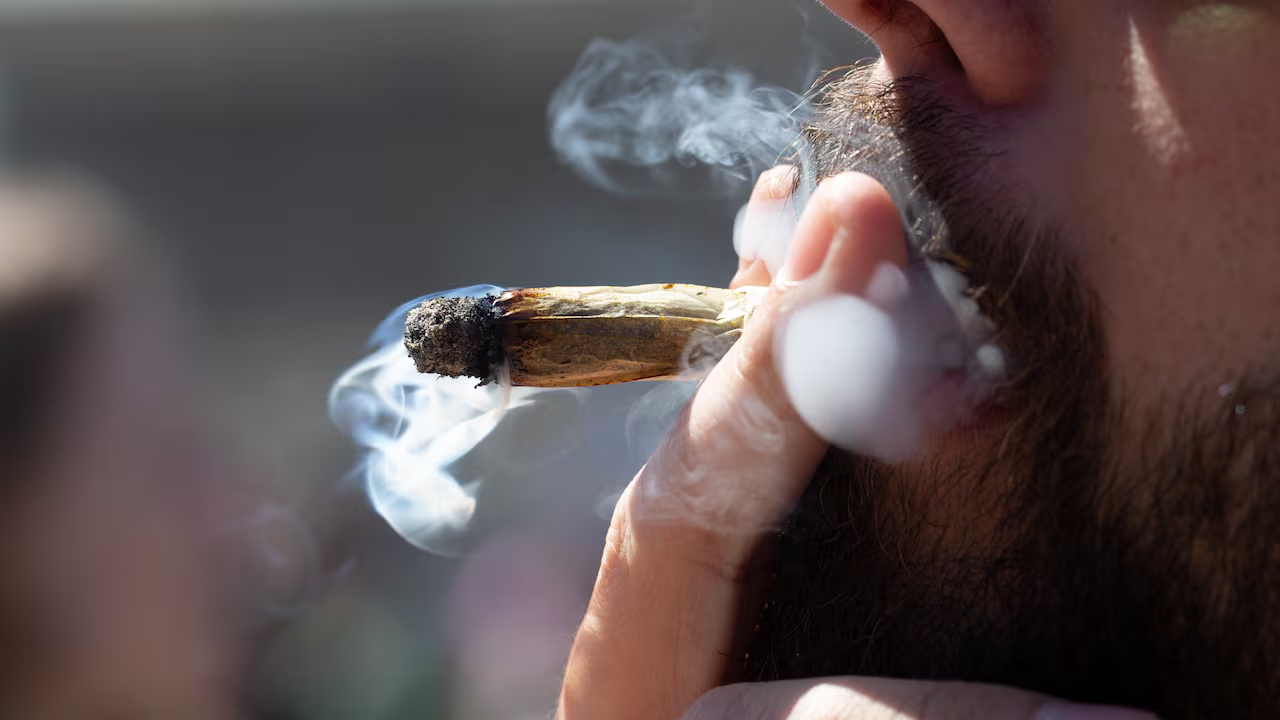
Additionally, a puff of marijuana contains volatile substances that can damage delicate tissues in the mouth and lungs, just like tobacco smoke does.
According to the US Food and Drug Administration’s website, ammonia, which can irritate the nose, throat, and respiratory tract, is frequently added to tobacco products to boost the body’s absorption of nicotine and make tobacco more addictive.
According to Cuomo’s email, “ammonia was twenty times higher in marijuana smoke” than tobacco.
According to Cuomo, marijuana also contains far greater concentrations of organic chemicals known as aromatic amines that may be carcinogenic, as well as hydrogen cyanide, a hazardous chemical used for fumigation and the production of plastics and pesticides.
According to Clonan, who oversaw a January study that discovered a significant incidence of cavities and tooth loss among marijuana users, breathing in any type of burning substance is bad for the lungs and mouth, even though additional research is required to confirm that marijuana smoke can cause oral malignancies.
She remarked, “You’re putting fire right in your mouth.” “We don’t currently have research on edibles as a cannabis delivery method, but I’d love to know what they do to the mouth.”
Anesthesia and marijuana are incompatible.
Marijuana use can significantly alter the body’s reaction to the anesthesia used to numb the mouth prior dental operations, which is one of the other risks of being high at the dentist.
According to studies, patients who routinely use marijuana or who use it on the day of surgery require more anesthetic and have greater pain and difficulties following medical operations. Then there is the effect on the heart: even in young, healthy individuals without a history of cardiac problems, marijuana use doubles the risk of dying from heart disease.
“There’s always a risk because we use local anesthetics with epinephrine, and marijuana has been shown to increase blood pressure and heart rate,” stated Clonan.
To constrict blood vessels, stop bleeding, and extend numbness, lidocaine and other dental numbing treatments are combined with epinephrine, also known as adrenaline. Dentists may use an alternative anesthesia for patients with heart disease and uncontrolled blood pressure.
“Cannabis has been shown to increase people’s anxiety,” Clonan said. “So, if people are panicky in the chair, if their blood pressure is already increased, their heart rates already increased, that’s an additional risk. “However, I don’t think it would be as risky as if someone was going under via nitrous oxide or sedation, where cannabis has been shown to create additional concerns,” she added. New York City orthodontist Dr. Austin Le, who is also an assistant research scientist at New York University’s Langone Health, said he would be concerned with “administering any type of anesthesia for people that are not fully sober or heavy users of any drugs.”
Le, the lead author of a 2022 study that discovered young marijuana users between the ages of 12 and 25 were more likely to have oral lesions, grind their teeth, and eat sugary foods during the “munchies,” said, “You’re worried about drug interactions or you’re just worried about the body responding in a very bad way, causing an emergency in the chair.”
Dental hygiene and marijuana
Speaking of munchies, becoming stoned can also result in actions that harm and cause teeth rot.
“Cannabis users typically snack on sugar-filled foods and carbohydrates, which are known to raise your risk of cavities,” Le stated. “Marijuana can also make people more lethargic and less likely to regularly brush or floss their teeth.”
Another risk factor is the dry mouth that might result from marijuana use.
“Saliva’s ability to act as a buffer is limited when the mouth becomes extremely dry,” stated Clonan. “Saliva helps remove food particles and plaque from your mouth, keeps it from sticking, and stops cavities from developing. Therefore, we prefer to have saliva in our mouths rather than dry ones.
Despite all of these worries, doctors claim that the majority of people are ignorant about the risks associated with consuming marijuana before seeing a dentist. Even dentists may not know what to do.
Clonan remarked, “It’s kind of uncharted territory.” “How will you handle a patient who is suspected of consuming cannabis at your office?
Teaching young dentistry students, Clonan now advises dentists to include questions regarding marijuana usage in the medical questionnaires that patients complete at entry.
She stated, “We want you to let us know if you use so you can be safe when you visit us.”
Additionally, we want to suggest that you take additional care of your teeth by brushing twice a day, drinking more water, visiting the dentist every six months, limiting sugar, and minimizing snacking.
“We’re asking about your marijuana use out of kindness and out of a place of understanding. We’re not passing judgment.”